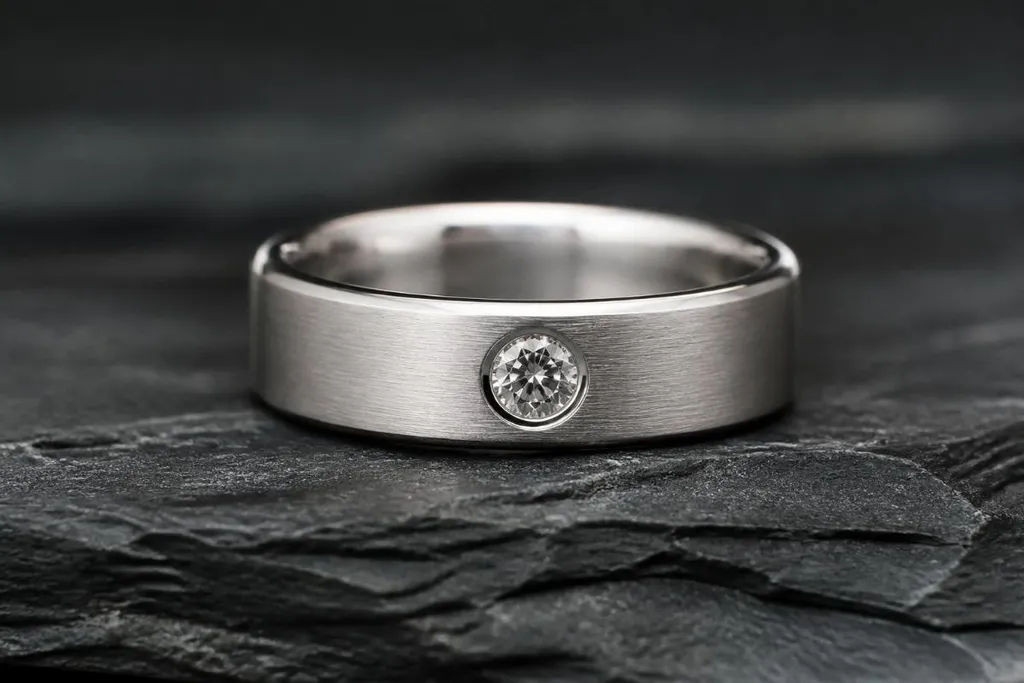
Men’s engagement rings no longer sit within one narrow design category. Some wearers want the simplicity of a beautifully proportioned precious-metal band; others prefer diamonds, gemstones or architectural details that make the engagement ring visibly distinct from a future wedding band. The best choice depends less on convention and more on how the ring fits the wearer’s existing style and daily routine.
Exploring timeless mens engagement ring designs reveals how traditional materials can be interpreted in distinctly modern ways. Platinum and gold can provide a restrained foundation, while diamonds and considered surface details introduce personality without making the ring impractical. Width, profile, setting style and finish are especially important because these details determine how substantial the ring looks and how naturally it sits on the hand.
Start With Width and Profile
Band width has an immediate effect on the character of a men’s engagement ring. A broader band creates greater visual presence and can suit someone accustomed to substantial watches or jewellery. A narrower design tends to feel lighter and more understated.
Finger proportions matter as well. A very wide ring can dominate a slender finger, while an exceptionally fine band may feel visually lost on a larger hand. Trying different widths is useful because differences of only a few millimetres can noticeably change the balance.
Profile influences comfort just as strongly. Rounded edges can create a softer traditional appearance, while flatter surfaces often feel more architectural and contemporary. The internal profile deserves attention too, particularly for a ring intended to be worn throughout the day.
Rather than choosing width according to what is considered conventionally masculine, consider what feels proportionate and comfortable on the individual hand.
Decide How Prominent the Stone Should Be
A men’s engagement ring does not need a gemstone, but incorporating one can clearly distinguish it from a plain wedding band.
For a restrained approach, smaller diamonds can be set flush or incorporated discreetly into the band. This keeps the surface relatively streamlined while introducing light and detail. Someone seeking a stronger focal point may prefer a larger centre stone or a setting that makes the gemstone a deliberate feature.
Stone shape changes the effect considerably. Round stones provide familiar brilliance, while princess, emerald and other geometric cuts can complement the straighter lines commonly found in contemporary men’s jewellery.
Size should serve the design. A wearer may choose a larger diamond because its proportions balance a broad band, not simply because greater carat weight is more impressive. Conversely, a smaller stone can look particularly considered when integrated into a clean, substantial setting.
The objective is visual coherence between gemstone and metal.
Choose Metal and Finish Around Personal Style
Precious metal gives the ring much of its personality before any additional detailing is considered.
Platinum provides a naturally white appearance and reassuring density, making it particularly suited to clean, substantial designs. White gold offers another cool-toned option, while yellow gold brings warmth and a more traditional fine-jewellery character. Rose gold can provide a softer, less expected interpretation.
Finish is equally influential. A highly polished surface reflects light strongly and gives the ring a formal appearance. Brushed or satin finishes reduce reflection and can create a quieter, contemporary look. Combining polished and matte areas allows subtle contrast without introducing additional stones.
Existing jewellery provides useful guidance. Someone who consistently wears a steel watch and cool-toned accessories may naturally prefer platinum or white gold, while a collection built around warm metals may make yellow gold the more coherent choice.
Design for Everyday Wear and Future Pairing
An engagement ring should work with the wearer’s routine rather than requiring constant caution.
Someone working regularly with their hands may prefer a lower-profile design with fewer raised elements. Flush-set stones and smooth edges can reduce snagging, while more prominent settings may suit a wearer whose daily activities place less stress on jewellery.
Surface marks should also be expected. Precious metals develop signs of wear over time, particularly on rings worn continuously. Some people appreciate this evolving character; others prefer periodic professional refinishing.
If the engagement ring will later be worn beside a wedding band, consider the two pieces together. Matching metals can create a cohesive pairing, while contrasting finishes or widths can deliberately distinguish the rings.
Final Thought
Men’s engagement rings are most successful when they reflect the wearer rather than a prescribed idea of what the design should look like. Traditional precious-metal bands remain compelling, but contemporary stone settings, finishes and proportions provide far greater room for individuality.
By considering width, profile, gemstone presence, metal and everyday practicality together, it is possible to choose a design that feels significant at the proposal and entirely natural years afterwards. That balance is what gives a men’s engagement ring genuine timelessness.